- Nurse Practitioner–led
- In Calgary since 2015
- Free 15-minute cosmetic consultationsFree consultations
- 2025 BNS Best in Business
What is an IPL photofacial?
Many patients who have spent extended time in the sun see accelerated signs of premature aging on the face, hands and décolleté. Sun spots are a form of skin damage, and one of the most common skin concerns. A photofacial is a simple solution to restore a more youthful-looking complexion.
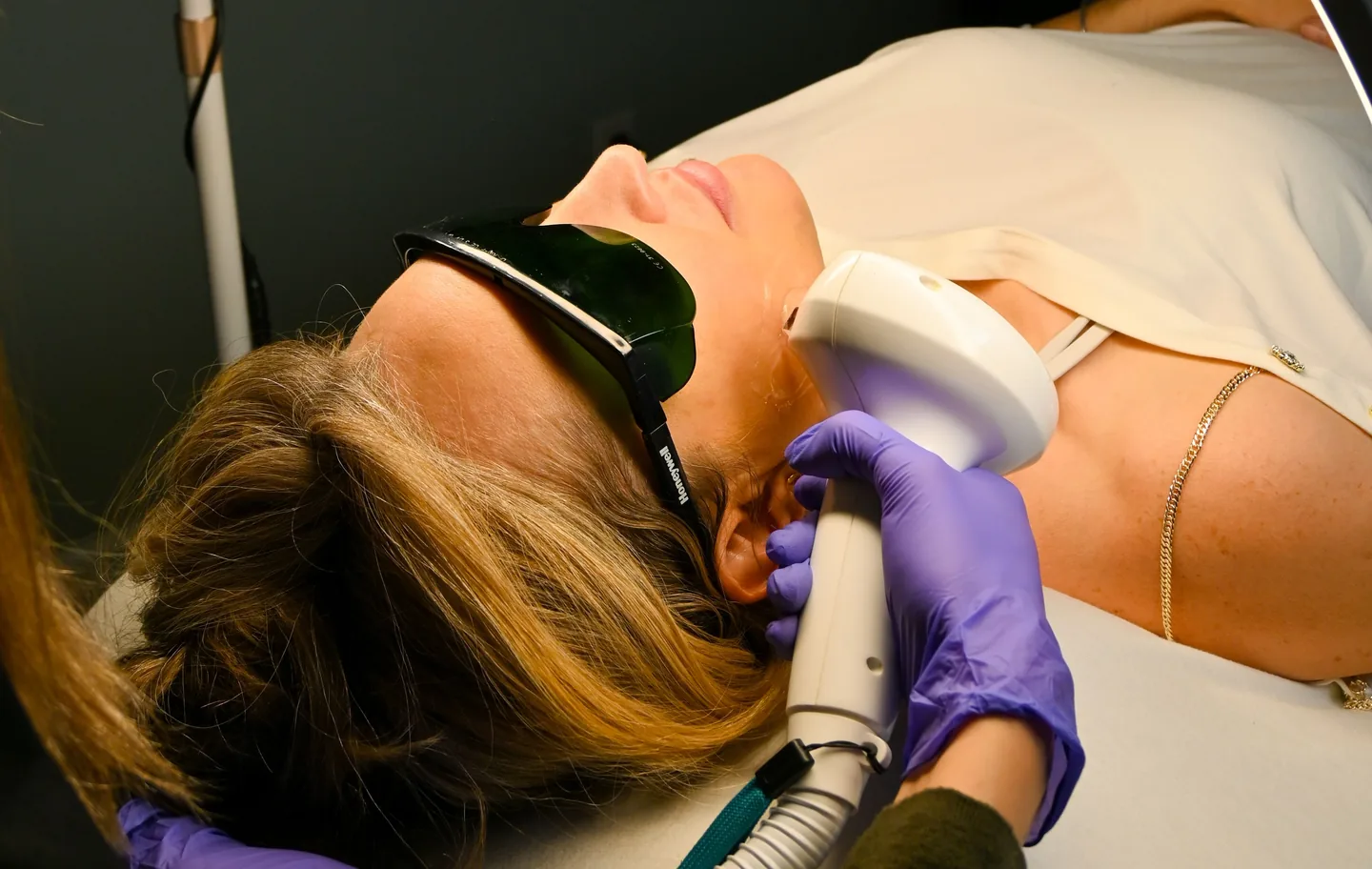
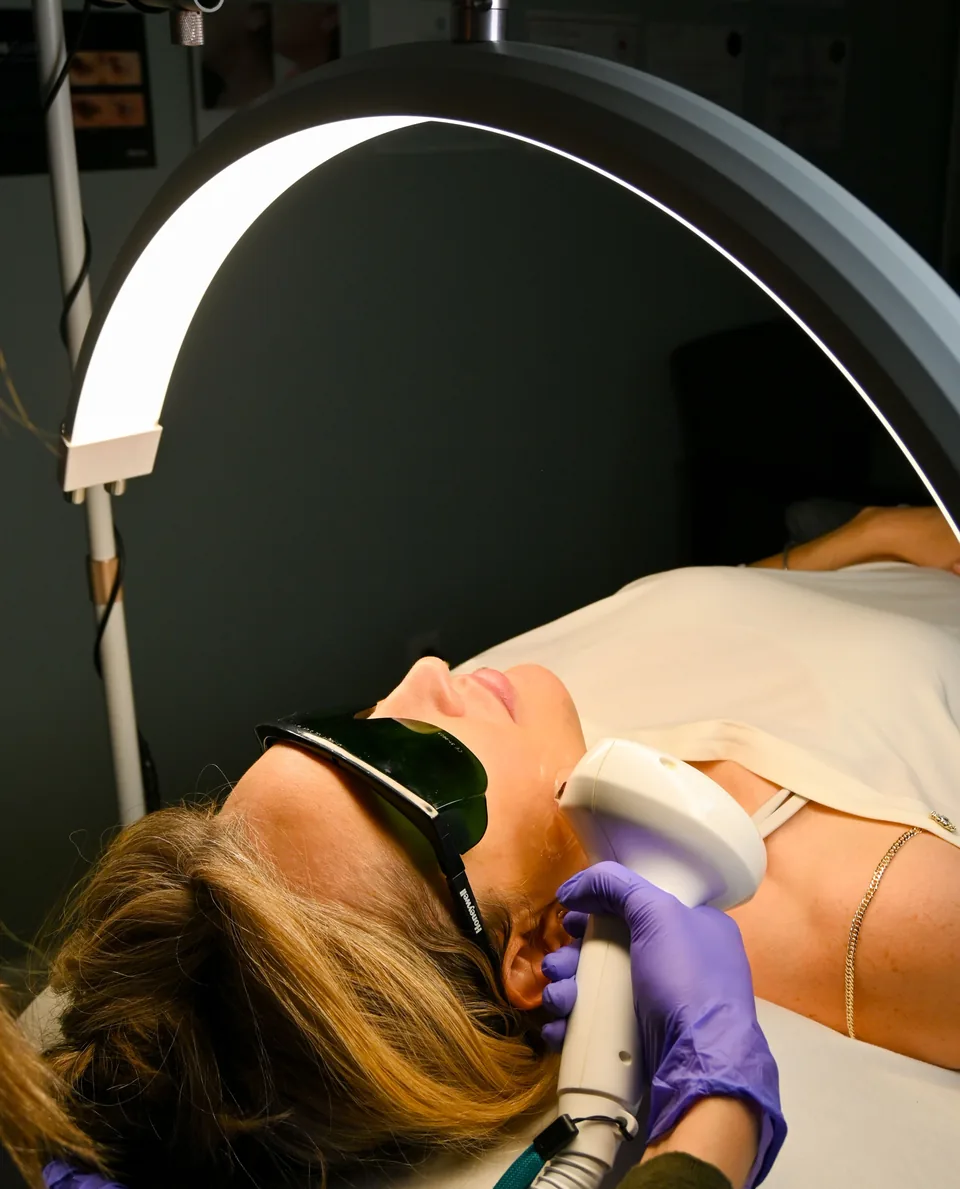
Our IPL photofacial uses the InMode Lumecca, a simple, non-surgical way to target pigment under the skin’s surface to reduce the appearance of discoloration and premature aging. There is minimal discomfort, and typically only some redness for about a day afterward. Each treatment also works on vascular marks, such as spider veins and capillaries. It usually takes 3 to 6 quick treatments per area, each about 15 to 20 minutes.
Not sure this is the right treatment?
A free 15-minute cosmetic consultation is where every plan starts. How a consultation works
What it treats
- Sun spots, brown spots and discoloration
- Uneven complexion and signs of premature aging
- Vascular marks such as spider veins and capillaries
- Fine lines (may improve)
Where
- Face
- Hands
- Décolleté
What patients say
Skin & confidence
“I’m not one for writing reviews, but I feel compelled to tell my skin care journey. Michelle and Jane have helped me change my skin and my confidence.”
Glowing skin
“I feel like a million bucks every time I see her. The products smell amazing and leave my skin glowing.”
New products
“Morgan helped me get everything I need and even recommended some new products to compliment my current routine.”
Transform
“I purchased Transform plant based enzyme from Michelle.”
What to expect
Consultation
A consultation is required before your first treatment, for your safety. A test patch may be done to check how your skin reacts.
Treatment
The IPL feels like a light snap or flick on the surface of the skin. The applicator has a built-in cooling feature, though a more sensitive area like the upper lip may be a bit uncomfortable; tell the clinician and they can adjust. A session typically takes 15 to 20 minutes.
Recovery
Your skin may feel warm, like a sunburn, and can stay red for anywhere from a few hours to a day.
Course
Most patients receive 3 to 6 treatments per area, done 3 to 4 weeks apart. The exact number depends on the person and the area.
Results
How long they last depends on how your skin reacts and how you care for it afterward; protecting your skin from the sun makes results last longer. One touch-up session every 3 to 6 months is recommended.
FAQ
Am I a good candidate?
The best candidate is someone with an uneven complexion and signs of discoloration. Photofacial treatments may also improve the look of fine lines.
Does it work on darker skin tones?
IPL targets pigment, so it is used on light to medium skin tones. It is not safe for skin types IV to VI (darker skin), because of the risk of discoloration. Your provider checks your skin type before your first treatment.
Can I do it on my lunch break?
Absolutely. Exact times vary, but a single session typically takes 15 to 20 minutes.
How many sessions will it take, and how far apart?
Most patients receive 3 to 6 treatments per area, 3 to 4 weeks apart. The exact number depends on the person and the area being treated.
What does it feel like? Does it hurt?
A light snap or flick on the surface of the skin. The applicator has a cooling feature to keep it as comfortable as possible, but a more sensitive area like the upper lip may be a bit uncomfortable. If it is too uncomfortable, let the clinician know and they can adjust the treatment.
How will I feel after?
Your skin may feel warm, like a sunburn, and can remain red for anywhere from a few hours to a day.
How long will the results last?
It depends on how your skin reacts and how you care for it afterward. If you protect your skin from the sun, the results last longer. We recommend one touch-up session every 3 to 6 months.
Can I put makeup on right after?
Yes, but put on sunscreen first.